

Books (NEW)
Margaret Laughton, Allison Paech-Ujejski & Paul Fray (eds) (2026) SENT AWAY: The BSConcern Anthology of Boarding School Poems, Cambridge: BSConcern
This collection of poems has been written by men and women as part of their recovery from the harm and trauma of being sent away at a young age to boarding school. The harm is not specifically due to hardship, cruelty or abuse: but the fundamental rift of broken attachment to parents, home, pets, toys and all that is familiar to the young child. Commonly, awareness of the impact of the boarding experience does not manifest until well into adult life.
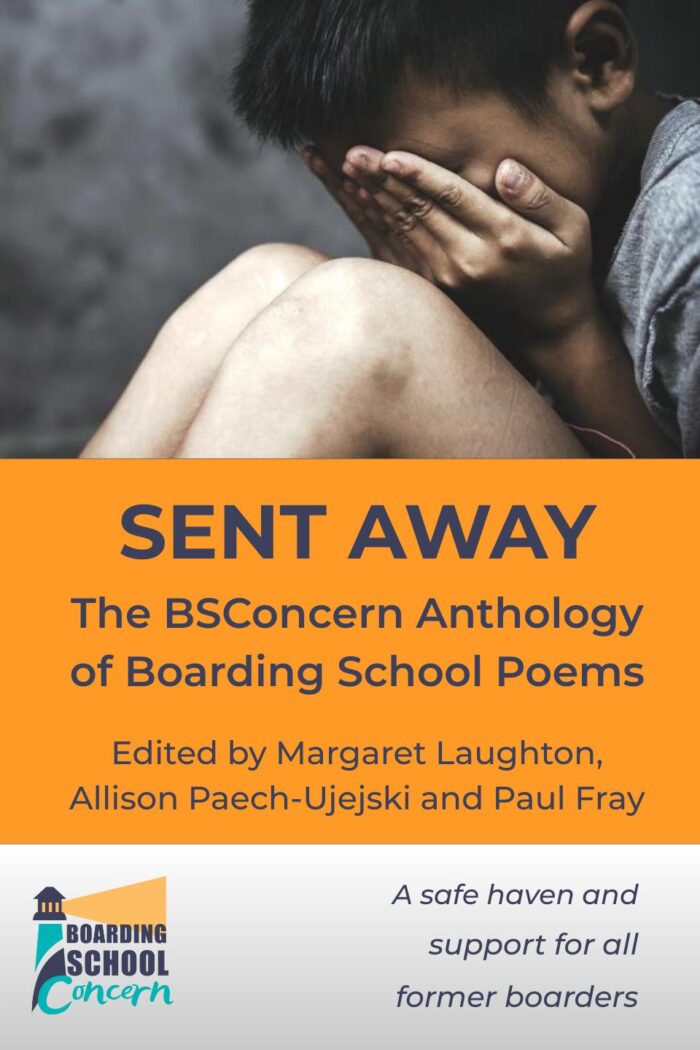
Former boarders often lead successful lives, but become increasingly conscious that something in them is incomplete. An event, such as a broken relationship or their own children starting school, can trigger a powerful response of distress and confusion, even to the point of breakdown and collapse. Only by seeking professional help and by their own hard work do they come to understand what has happened to them – that it is not their fault; that they can grow and learn from the experience; and that they can see themselves and those they love in a new and kinder light. Creativity can play a large part in this process, be it in the visual arts, drama, writing or, as in this book, poetry. The editors, two of whom are former boarders, all have worked as part of Boarding School Concern and its predecessors to help former boarders come to terms with their situation.
For this book, they have made a selection from the poems written over many years for Poetry Corner at the well-regarded annual conference held by Boarding School Concern. In addition, they have chosen some other poems from the literature that particularly well express the impact of boarding. This anthology will be a route to reflection at the deepest level for former boarders. For psychotherapists, counsellors and educators it will provide insight into the often buried turmoil of the former boarder’s psyche.
Available directly from BSConcern for shipping to UK only, or from IngramSpark and Amazon.
Angus Bell (2026) The Lost Boys: A memoir of survival, silence and the system that failed generations, Darius Publishing
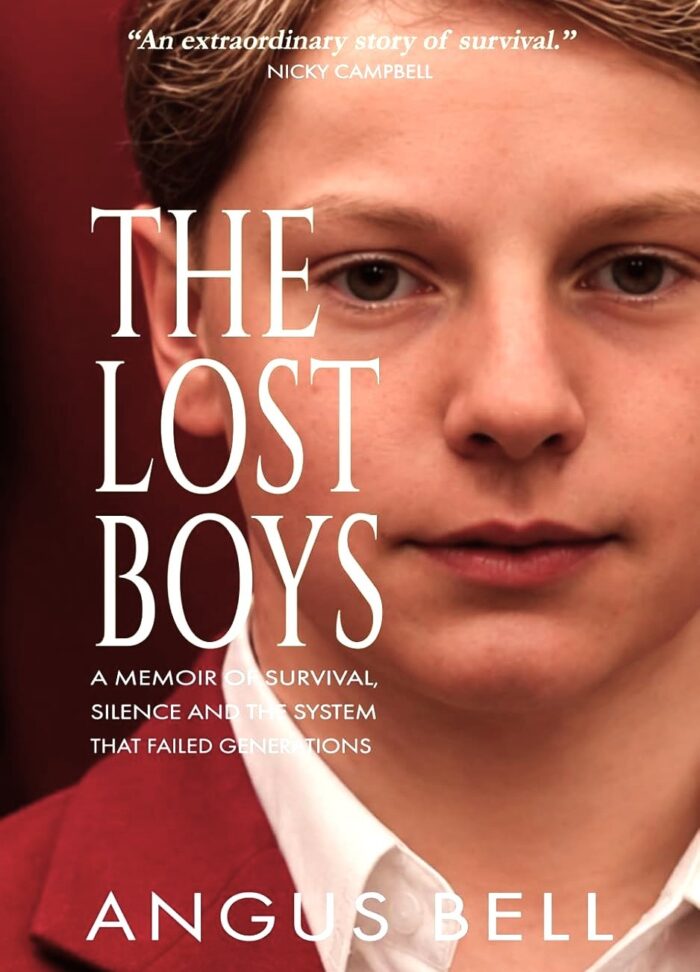
At the age of ten, Angus Bell was sent to an elite British boarding school – promised a life of privilege, achievement and excellence. But beyond the ivy-covered walls and manicured lawns he discovered a brutal hierarchy in which innocence, empathy and individuality were crushed.
The Lost Boys is the harrowing and unforgettable story of surviving eight years of daily cruelty, sadism and violence, and a decades-long battle for truth, justice and recovery.
Told with unsparing honesty, this true-crime memoir is more than a personal account; it is a devastating exposé of a system that left generations of children carrying its scars.
Raw, courageous, and ultimately triumphant, The Lost Boys will break your heart, open your eyes, and inspire you to challenge the silence that allows abuse to continue.
Available here.
Dominic Stuart (2026) Backside of the British Empire: from patriarchy to community, Rambling Roots Publishing
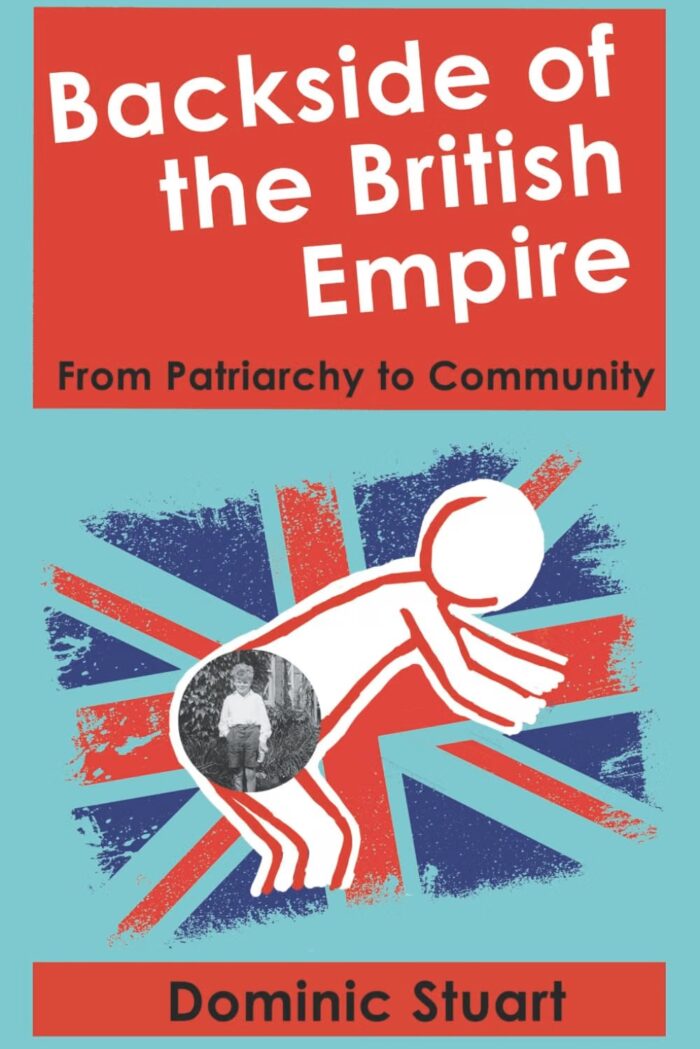
Dominic Stuart was born in the picturesque English village of Coln St Alwyns in 1948. A month later, his mother died. So began a life of traumatic loss that became a search for community and deep healing.
Although his adult life was mostly spent in business in London, his heart always remained in Scotland. The village of Findhorn in northeast Scotland was a much-loved family holiday destination. Later, the Findhorn Community, located beside the village, would give Dominic a sense of spiritual community.
His true passion was acting, which he finally pursued at the age of fifty-three, studying with the great French teacher Philippe Gaulier.
Dominic returned to Scotland in 2012 and made it his home, just down the road from the Findhorn Community.
In 2014, he reconnected with Gay Young, a Canadian he had met in 1978. The last twelve years of his life were spent flying back and forth to Canada. In 2025, they were married, and he settled down with Gay on Salt Spring Island, British Columbia.
Sadly, their happiness was short-lived. Dominic passed away on 20 July 2026.
This is my life from cradle to end. A life full of horror, humour, beauty and joy. A life spanning post-war upper class Britain to millennial gender liberation; from a tiny prep school in Dorset, England to Eton College and beyond to Findhorn…and sanity.
Available here.
Peter Sykes (2025) Somewhere Never Home: Healing the Labels of Privilege
Pete’s childhood looked enviable from a distance Caribbean beaches, flights between continents, and the polished rituals of a British boarding school. But behind the postcard scenes was the emotional reality familiar to so many Third Culture Kids and Boarding School Survivors. His infancy was marked by constant uprooting, emotional whiplash, and the quiet, confusing ache of never truly belonging anywhere for long. Boarding school added another emotional wound: the well-practised shutdown of a child learning to survive abandonment, captivity, and abusive adults who used fear to silence children. The early seeds of the CPTSD that would follow him into adulthood were sown.
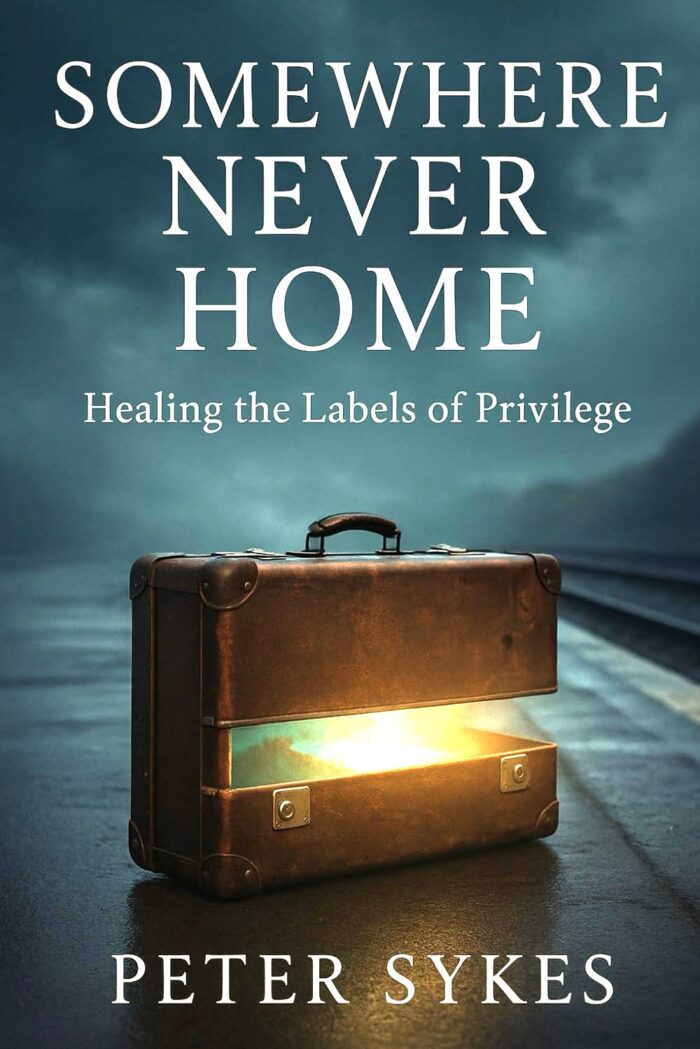
Somewhere Never Home is the story of a childhood lived everywhere and nowhere. Moving between Scotland, Africa, the Caribbean, and an abusive English boarding school, Pete grew up a classic Third Culture Kid: adaptable on the surface, fractured underneath. What looked like privilege hid the early wounds of emotional abuse, institutional harm, and the long shadows of Boarding School Syndrome and cPTSD.
For decades, Pete wore the labels of success – Cambridge, the BBC, Unilever, and a career leading disaster responses across some of the world’s toughest places. But beneath the competence lay the hidden consequences of a TCK upbringing, early abandonment wounds, and boarding-school survival: alcohol misuse, failed relationships, and the exhausting lifelong performance of pretending to be “fine”.
Told with humour, candour and hard-won hope, this memoir is about unlearning those inherited labels and understanding the adult patterns they created. It speaks to anyone shaped by childhood instability, institutional harm, or the long tail of CPTSD. It shows that recovery isn’t about erasing what happened but slowly reclaiming the self that learned to pretend it didn’t. It’s a book for anyone who has spent years ignoring or running from their past, and is ready, finally, to come home to themselves.
Available here.
Karen Wilson (2025) Atrocious Behaviour: Rebellion & Reckoning Inside the British Boarding School System, Cragside Publishing
Atrocious Behaviour tells the story of a girl’s boarding school in the 1970s, where manners and obedience were core curriculum.

Boarding school in the 1970s was a world of dormitory games, hidden contraband, and secret friends. It is also the story of their resultant punishments, school rituals and many small humiliations. While many have begun to write from the perspective of both examining the system and relating experience, this story also leads up to the drama of being expelled aged ten, the impact of the theatrical way this was handled, and learning to live with that experience in adult life. After decades of sharing outrageous episodes of pint-sized rebellion, I gradually re-framed the stories with new understanding both through a long career in teaching and raising two children myself. It begins with returning to the school (now long since reclaimed as a country house) 30 years later, with my husband and children, which turned out to be the beginning of new understanding of the impact of school culture on a child.
Available here.
Clif Laurence (2025) Dick Whippington and the Posh Boys of Beaton: The Correct, Proper, Approved Education for the Elite, London: Panda Publishing Agency
This is a satire/ parody/ spoof/ mockery of ‘Public School’ education (i.e. Expensive elite private boarding school) of the British “elite” and the attitudes of “elite” families.

Dick Whippington is nearly fourteen and about to go to his ‘Public School’, Beaton College. He is told it will be ‘The Making of Him’, but he is anxious about what that means. He has just left his ‘Preparatory School’, Conformingham Academy for the sons of Gentlemen after boarding from the age of eight. He feels like an orphanage misfit, an oddity, and wonders if he’s possibly an alien. What else could account for him being so different? Dick is at the start of the trials and tribulations of adolescence. He lives with his family but feels unheard, unacknowledged and largely unwanted as his mother constantly bosses him, dominates him, tells him what to think, what he should feel and the many ‘correct’ things he should say. He gets so much criticism if he dares to say anything he actually feels, it seems as if there is no room for him, only for a performance of him.
Available here.
Gavin Cologne-Brookes (2025) Portraits from Paris: School & Travel Remembered from the City of Light, Baton Rouge: LSU Press
Described by Posh Boys author Robert Verkaik as “a beautifully written painter’s portrait of surviving boarding school and finding validation in art,” this is a novelised memoir of how the experience of boarding in the 1970s helped to turn Cologne-Brookes into an oil painter and led to years of restless travel.

He wrote the book in the Louvre between 2019 and 2024 after leaving his university post. “It’s time to take stock,” he explains at the start. “I’m doing this not just by discovering Paris but also through oil painting and constructing a memoir of childhood entrapment and adult freedom.”
The two clear gains from those schooldays were his discovery of painting and his desire to be elsewhere.
Sad Little Men author Richard Beard writes that Cologne-Brookes’s “visual artist’s eye for detail evokes a distant past in all its absurdity and eccentricity” and calls the book an “uplifting account of a life in search of liberty.”
Novelist Mimi Thebo writes that “the brutality of school opens the reader’s heart (and eyes) to the brutality that lies behind so much of the art.”
Perhaps, Cologne-Brookes concludes, “contemplation of childhood bruises” can render “all the brighter the golden moments of adulthood,” and “unfortunate experience” can beget “fortunate wisdom.”
Available here.
Nick Duffell, ed. (2025) The Un-Making of Them: Clinical Reflections on Boarding School Syndrome, Abingdon: Routlege
Ex-boarders can be among the most challenging clients for therapists, with many clinicians struggling to address their unique needs. This book presents a groundbreaking collection of chapters sharing insights and reflections on clinical work with ex-boarders in different settings and circumstances with the aim of expanding the body of knowledge for therapeutic work with such clients.
The contributors reveal that the fall-out from boarding is much wider than previously thought and also report on innovative treatment methods that may help therapists address these consequences with ex-boarders in treatment.

Featuring the experience and insights of some 16 different clinicians, many of whom are ex-boarders themselves, this new collection offers contributions from a wide range of theoretical backgrounds, including psychodynamic, Jungian, transactional analysis and ‘energy psychology’. It tells how the understanding of the ‘boarding school syndrome’ has been enlarged by recent advances in attachment therapy, trauma studies, neuroscience, including pastoral, and safeguarding awareness within education. Topics covered include the effects of boarding on girls, on both intimate and sibling relationships, on military family boarders and on ex-boarder therapists, as well as how both careful, patient attention and dynamic EMDR may be used to alleviate boarding school trauma.
The reader will gain a wider understanding about how individuals and society are impacted by this way of raising children and what evidence-based pathways to recovery are being evolved.
This book is written in an accessible jargon-free style and will appeal to psychotherapists, psychologists, psychoanalysts and counsellors, as well as ex-boarders and parents interested in the impact of boarding schools from a professional or personal perspective.
Available here.
Nicky Moxey and Linda Devereux, eds (2025) Exploring Boarding School Challenges for Women and Third Culture Kids: Worlds Away from Home, Abingdon: Routledge
Through personal testimonies, this book offers insights into the boarding school experiences of women and Third Culture Kids (TCKs), examining the particular challenges for those who are sent away from their families, and all that is familiar, to board in a country that feels worlds away from home.

The stereotype of expatriate families is of glamorous lives lived in exotic locations with access to wealth and privilege. However, many of these families feel pressure to send their children ‘home’ to boarding school in their passport country without understanding the long-term implications of this choice. This book explores such long term effects, starting with laying an accessible theoretical framework for the reader by drawing on scholarship from the fields of psychology, the study of TCKs, and the growing understanding of Adverse Childhood Experiences (ACEs). The text then moves into the personal testimonies of 16 individuals, most of whom are TCKs or cross-cultural boarders, shedding light on the particular challenges they’ve faced. The book ends by offering hope and help with chapters providing insights and practical strategies for supporting those affected by boarding school.
This user-friendly, accessible volume will appeal to professionals working with transcultural boarders, ex-boarders, or those who are considering sending their own children to boarding school.
Available here.
Toby Ingham (2025) A Guilty Victim: Recovering Creativity after Trauma and Abuse, Oxford: Phoenix Publishing House
The complex nature of grooming and abuse is often simplified by those who do not understand it and are left wondering why the victim allowed it to happen. A Guilty Victim challenges that misconception and explains how and why abuse continues and the impact it leaves on the victim’s life. It explains that we remain trapped in situations not because there is something wrong with us, but because of things that have happened to us.
It is unusual to have permission to be able to illustrate the process of psychotherapy in action. William Smith bravely suggested his story be told to help at-risk children by showing adults how to recognise the warning signs in children’s behaviour. His long journey to recovery is also an inspiration to others struggling to come to terms with childhood trauma.

The book is presented in five parts. The first details the start of William’s psychotherapy. Part II takes us back to William’s childhood, a time of traumatic experiences, culminating in him being sent away from England to a Catholic boarding school in Ireland where a priest exploits his vulnerability. Part III continues his life story past school to a life dominated by work and heavy drinking, and marked by his first suicide attempt. His fortunes change when he meets Meg and finds some stability. Years later, when his youngest child leaves home and he has time on his hands, his suicidal feelings return. It is at this point he starts psychotherapy. The penultimate part focuses on William’s creativity and his innovative illustrated timeline of his life. This creative project is a key part of his recovery. Once that is completed, his psychotherapy starts to come to an end, which is the final part of the book.
A Guilty Victim is a human story that will appeal to anyone with an interest in understanding trauma, psychotherapy, wellness and mental health. It is especially relevant to people with responsibility for safeguarding children and vulnerable people. It is a counter to a market saturated by vignettes, fictionalised stories, and life hacks.
Available here.
R Raven (2025) Surviving Privilege
Memoir of Privilege and Trauma: A Journey of Healing and Resilience
Step into the hidden world of wealth, family secrets, and boarding school survival. This memoir pulls back the curtain on the truth behind a privileged life that many envy, yet few truly understand.

Growing up surrounded by luxury, prestige, and societal expectations, the author reveals the emotional scars left by psychological abuse, neglect, and a family life built on secrets. Behind the polished facade of riches lies a reality of trauma, heartbreak, and the pursuit of healing.
This deeply personal narrative shares the often unseen struggles of growing up in a world where perfection is expected, but emotional survival becomes the true challenge. Surviving Privilege explores the complicated dynamics of wealthy families, the toll of boarding school life, and the journey to overcome childhood trauma and psychological abuse.
Join the author as she navigates the pain of her past, learns to confront her fears, and ultimately finds a path to emotional healing and resilience.
This book is for anyone who’s ever wondered what really goes on behind the doors of wealthy families or has struggled with their own path to recovery.
Available here
Isobel Ross (2024) Almost Boys: The Psychology of Co-ed Boarding in the 1960s, Cheltenham: Goldcrest Books

Isobel Ross was a pupil at a co-educational boarding school in Scotland from 1965 to 1971. Unique about this school was that boy boarders far outnumbered girl boarders, and, by the late 1960s, the adults in charge had become confused about their duty of care.
Words from Isobel’s adolescent diaries, anxious but perceptive, and her current voice, based on over thirty years as an educational psychologist, combine in this narrative to create a unique psychological perspective.
Available here.
Charles Spencer (2024) A Very Private School, Glasgow: HarperCollins

In this poignant memoir, Charles Spencer recounts the trauma of being sent away from home at age eight to attend a boarding school.
A Very Private School offers a clear-eyed, firsthand account of a culture of cruelty at the school Spencer attended in his youth and provides important insights into an antiquated boarding system. Drawing on the memories of many of his schoolboy contemporaries, as well as his own letters and diaries from the time, he reflects on the hopelessness and abandonment he felt aged eight, viscerally describing the intense pain of homesickness and the appalling inescapability of it all. Exploring the long-lasting impact of his experiences, Spencer presents a candid reckoning with his past and a reclamation of his childhood.
Available here
Daniel Kupfermann (2023) “Don’t Be So Sensitive!”: Surviving a Broken Boyhood in a Foolish Era
My memoir Don’t Be So Sensitive! explores some dark themes. It was only when I was writing the book that I came to realise – OMG – everyone in my family attended boarding school and they’re all screwed-up!! It was an amazing discovery.

Almost everyone in my family went to boarding school. My mother boarded from the age of 8. She was bullied badly and developed a drink problem in adulthood.
My stepfather also went to boarding school from a similar age. He was also bullied and became very embittered and angry. Ironically, he never ceased wanting the same for me – probably to get me out of the house!
My two half-brothers also boarded from the age of about 9. Both became alcoholics.
I thought I’d escaped boarding school because I attended private schools as a day boy. But in a way I was wrong. My memoir explores the subtle ways the boarding school experience affected my mother’s psychology, paving the way for my annual seasonal abandonment.
Available here.
Person Irresponsible (2023) Everywhere I NEVER Wanted To Go: but I did anyway
In the latest iteration of her mid-life crisis, Person Irresponsible, England’s most invisible female adventurer, bought a ubiquitous white van, complete with toilet, bed and kitchenette.

She only added a cat litter tray. Her mission: to fathom why people believed England was going down the toilet.
Unexpectedly, she discovered quite a bit about the culture she is said to hail from. Having been trapped in boarding school from a young age and force-fed history lessons on men doing unspeakable things to one another, she came out the other side quite deranged.
Where was her England? Who were her icons? What mysterious forces had shaped her behaviour? Where was she really from? Where was herstory?
Everywhere I NEVER Wanted To Go tells the story of one woman’s year-long journey in a van exploring every county but the London boroughs – all the while recollecting a childhood best forgotten.
Available here.
Martin Flanagan (2023) The Empty Honour Board – a School Memoir, Penguin Books: Melbourne
In 1966, at the age of 10, Martin Flanagan was sent to a Catholic boarding school in north-west Tasmania. Of the 12 priests on the staff, three have since gone to prison for sexual crimes committed against boys in their care. In 2018 and 2019, a series of disclosures about the school appeared on the ABC Tasmania website. Then came the Pell case. What followed was a frenzy of opinions, none of which represented Flanagan’s view.
The Empty Honour Board is part memoir, a reflection on truth and memory, and what is lost in rushing to judgement.

Flanagan’s school abounds in memorable characters. There’s a kid who escapes and gets as far as Surfers Paradise, and two boys who hold a competition during evening chapel to see who can confess more times. A wild boy receives a ‘Bradmanesque’ 234 strokes of the cane in one year.
It is a lonely and, at times, scary existence – as while the boys are victims of violence, they are also perpetrators. Drawn to neither the school nor its religion, Flanagan discovers himself through sport, later becoming known as one of Australia’s most creative sportswriters.
But his boarding days linger. In his first three years at the school, he’d faced a series of adult moral challenges. Not being an adult, he had failed – in his own estimation. This becomes of great consequence in his 20s when his wife is about to have their first child.
A major reckoning with his past, however, leaves him with his ambition as a writer.
A prison diary, a story of brotherly love, a journey of redemption, Flanagan’s book goes inside an experience many have had, but few have talked about.
Available here.
Penny Cavenagh, Susan McPherson & Jane Ogden, eds (2023) The Psychological Impact of Boarding School – The Trunk in the Hall, Abingdon: Routledge
The Psychological Impact of Boarding School is a collection of research-based essays answering a range of questions about boarding school and its long-term impact.

Through a combination of original in-depth first-person narratives as well as larger scale surveys, this book aims to fill gaps in current boarding school research and present new findings. Topics addressed include gender differences, eating behaviour, loneliness, mental health and relationships, the differences between younger and older boarders, and ex-boarder experiences of therapy.
The research results highlight a key role in the age that children start boarding, the way that long-term psychological influences of friendships formed at school, and the larger role that parent and family relationships play in the psychological lives of boarders. Through these findings, the book ultimately challenges the current understanding of ‘boarding school syndrome’, proposing a move beyond the term and its concept.
Available here.
Soosan Latham & Roya Ferdows (2023) Childhood, Identity and Masculinity – The Boarding School Boys, Abingdon: Routledge
Childhood, Identity and Masculinity: The Boarding School Boys examines the lives of ten Iranian men who were sent to boarding schools in England during the 1960s and 1970s.
Their stories, situated at the intersection of Eastern and Western cultural values, signify their passage to manhood, and highlight the meaning of masculinity then and now.
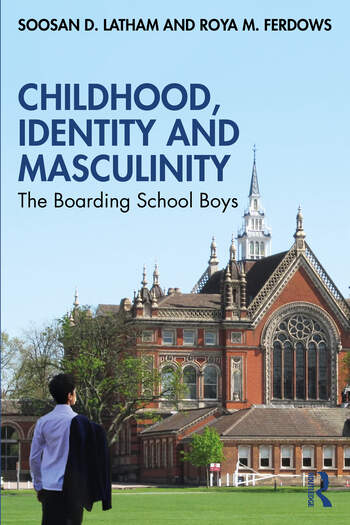
The reflective narratives explore issues of physical and emotional abuse received from administrators and peers, as well as the ‘man up’ motto that pressurised them to persevere in the spirit of meeting expectations and becoming a man.
Narrated within the context of the traditional role of men in both Iranian and British societies, the book highlights key themes of trauma, survival and resistance, power and privilege, and their impact on the men over their lifespan. The volume offers rich insight into understanding the developmental challenges that adolescent boys face as they attempt to deal with the trauma of separation from their parents, while conforming to strict rules and regulations of boarding school education, and societal expectations of them.
Available here.
See the earlier volume by the same authors: The Boarding School Girls – Developmental and Cultural Narratives.
Andrew Kavchak (2023) Westminster School: Reflections of a Boarder
Andrew Kavchak was 13 when his divorced parents sent him in 1976 from Montreal, Canada, to attend Westminster School. Andrew’s parents expected him to spend his adolescence living at the school and then pursue his education at Oxbridge. Things did not turn out that way.

In this autobiographical account, Andrew describes his experience as a Canadian in an elite boarding school in the heart of 1970’s London, and the long-term impact on his life.
This book is about opposites: belonging and exclusion, success and failure, history and modernity. Above all, it is about a teenager’s reactions to all six. Andrew delves, for example, into the prolonged separation from his parents and the resulting sense of abandonment and alienation. He reflects on the pitfalls of a foreign name, accent, vocabulary and previous education. He also describes how he coped with his circumstances and how this experience affected him for many years.
Anyone interested in “Boarding School Syndrome” will find his insights fascinating.
Available here.